
| Comparison | PGM quality | Common quality |
| Carbide Tip type and size | PGM certified with strict filtering | No |
| Size criteria | Parameters such as tip angle, shank diameter, spiral thickness etc. are designed and calculated by professional German company to maximize the drilling performance and effective dust removal. | No fixed design parameter or purposes. |
| Soldering | PGM requires auto brazing with controlled brazing tip length and mechanically centralized tip. | Manual soldering, soldered by experience, no accurate tip positioning. |
| Heat treatment | Special vacuum heat treatment technique according to PGM requirement, ensure the high breaking tenacity of the bit shank to match the life time of the wear-resistant and tough tungsten tip. | Normal 40Cr steel or carbon steel heat treatment. HRC can reach similar rank but the inner structure cannot ensure high breaking tenacity or long time wear-resistant. |
| Surface treatment | Specific shot-peening technique removes the shank stress points to create high torque strength and reduce flute wear, prolong the shank life, make the bit with bright and smooth surface. | Sand blasting, cannot remove the shank stress points, easy to rust. |
| Anti-rust treatment | Anti-rust period above 2 years thanks to the PGM standard premium anti-rust oil. | Common aqueous or dry anti-rust oil, with anti-rust period around one year. |
| comparison | Auto-copper alloy soldering | Common manual brazing |
| Soldering flux | Special copper flux prescription with higher melting point | Copper wire/strip with 10-25% silver, or common pure copper, with 700-850°C melting points. |
| Brazing temperature | 1200-1250°C brazing temperature ensures the drill bit with a higher heat-resistant performance when in continuous drilling, the strong attachment of the copper flux prevents the tip from falling. | 700-850°C |
| Soldering process | Inside the vacuum brazing oven, gradually warming up ensures the steady character of the tungsten tip, not easily become fragile. | Instant heat up destroy the inner structure of the tungsten tip to become fragile,breakage happen during drilling. |
| Soldering strength | Melted copper flux assures proper and complete distribution of copper brazing elements to attach the tip and shank as a whole. Then longer life time is ensured. | Manual soldering, soldering flux not evenly distributed, open or inconsistent soldering easily appear. The unevenly distributed soldering flux always cause the tungsten tip dropping in big diameter drill bits. |
These are typical pairings seen with common DIY hardware. Always verify the exact model’s instructions—don’t substitute sizes.
| Anchor or plug type (example) | Typical nominal drill bit |
|---|---|
| 1/4 in plastic wall plug | 1/4 in SDS‑plus masonry bit |
| 3/16 in plastic wall plug | 3/16 in SDS‑plus masonry bit |
| 5/16 in sleeve anchor | 5/16 in SDS‑plus masonry bit |
| 3/8 in wedge anchor | 3/8 in SDS‑plus masonry bit |
| 1/2 in wedge anchor | 1/2 in SDS‑plus masonry bit |
Strong reminder: For mechanical anchors (wedge, sleeve, screw anchors), the nominal bit size and cleaning steps are specified in the product’s installation instructions or evaluation reports (e.g., ICC‑ES, ETA). Follow those documents for your specific model.
| Symptom | Likely cause | What to do |
|---|---|---|
| Anchor slips or feels loose | Hole oversized; bit worn past wear mark; wrong nominal size; dust left in hole | Replace the bit if worn; confirm the exact nominal size; re‑drill and thoroughly clean; for non‑critical tasks, consider an approved repair (manufacturer guidance) or relocate the hole |
| Bit wanders on start | Hard aggregate; starting in hammer mode; dull tip | Start in rotation only to seat the bit; use a centering tip; replace worn bits |
| Sudden hard contact mid‑hole | Possible rebar | Stop. Relocate if feasible or use approved methods and tooling; consider structural implications before proceeding |
| Edge breakout/crumbly hole | Too close to an edge; excessive hammering; brittle masonry | Respect minimum edge distances; start gently; consider a smaller pilot seat before full size |
| Dust packs and stops progress | Ineffective extraction; feed too aggressive | Lift slightly to clear dust into the shroud; ensure HEPA vac flow; brush/vacuum mid‑drill if needed |
Controlling respirable crystalline silica is non‑negotiable. OSHA’s construction standard organizes “specified exposure control methods.” For handheld and stand‑mounted drilling, using a drill with a commercially available shroud/cowling and a dust collection system, operated and maintained per instructions, can meet Table 1 controls—often with no respirator required when fully implemented. See OSHA’s construction standard overview for context. NIOSH similarly emphasizes engineering controls first (close‑capture extraction, water suppression) and provides guidance on respirator selection when controls aren’t sufficient or practical.
Engineering controls & respirators: NIOSH silica work hub
PPE basics for DIY concrete drilling:
Eye/face protection and hearing protection
Sturdy gloves and snug clothing (avoid snag points)
Dust shroud plus HEPA vacuum or wet method; ventilate the space
Pause and reassess if visible dust escapes controls, if you suspect utilities, or if drilling affects a structural element
Micro‑exercise 1 (15 minutes): On a scrap brick or block, mark and drill three 1/4 in holes using the full routine: seat in rotation, switch to hammer, use a depth stop, and clean thoroughly. Test‑fit three wall plugs; note any differences in fit and what changed (feed, cleaning, bit wear).
Micro‑exercise 2 (20 minutes): Repairing a slightly oversized, non‑critical hole. If a plug is loose, relocate the hole or use the manufacturer’s approved repair method. Practice the repair on scrap first and compare the holding feel before using it on your wall.
What’s the difference between SDS‑plus and SDS‑max? SDS‑plus is the lighter, common interface for typical 3/16–1/2 in holes in DIY tasks. SDS‑max is for larger holes and heavier-duty tools.
Do I need a special bit for anchors? Use a PGM‑marked carbide‑tipped masonry bit of the exact nominal size from your anchor’s datasheet. That supports the accuracy anchor holes need.
How deep should I drill? Follow the anchor’s embedment requirement, adding any extra depth specified in the instructions to clear dust and allow full seating.
Can I drill into brick the same way I would into concrete? Yes, with the same routine; the brick can be more brittle, so start gently, avoid edges, and keep the drill perpendicular.
What if I hit rebar? Stop and reconsider the location. For structural elements, contact a professional before proceeding with any rebar‑cutting method.
Do I always have to clean the hole? Unless your specific anchor model explicitly says otherwise, yes. Many installations require a brush + vacuum + air sequence or integrated dust extraction.
Ready to compare diameters and cutter styles for your project? Browse a neutral range of SDS‑plus hammer drill bits to see common sizes and head designs: Hammer Drill Bit.
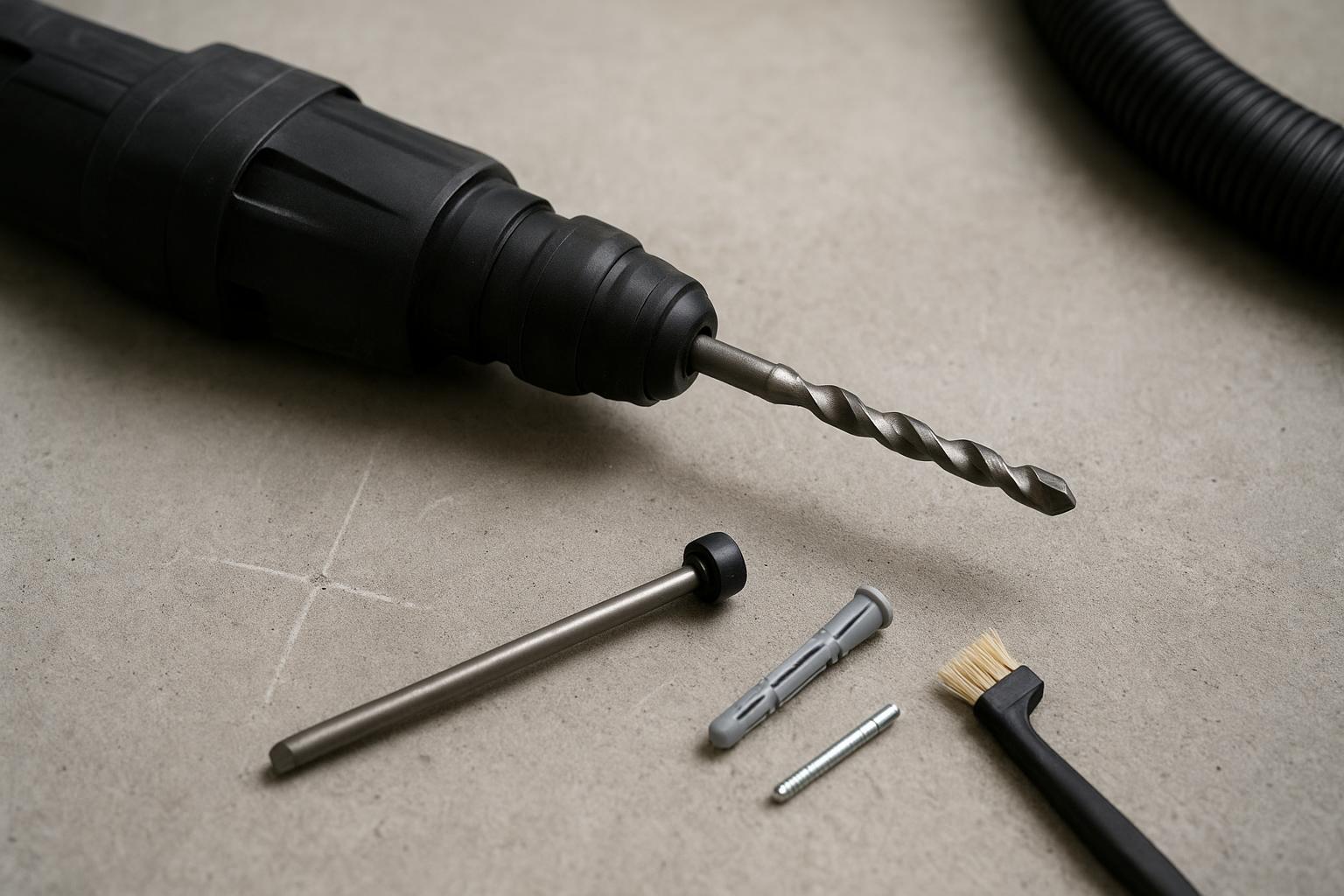
Want to mount shelves, curtain brackets, or a hose reel on a concrete or brick wall—and have the anchors actually hold? This guide shows you how to pick the right hammer drill bit, drill a clean, accurate hole, and set wall plugs or mechanical expansion anchors with confidence. You’ll learn the essentials of precision (2- vs 4-cutter carbide heads, PGM certification), safe dust control, and a reliable, step-by-step routine.
Task size: Most home anchor holes are 3/16–1/2 in (5–12 mm). That’s squarely in light-duty territory.
Tool & shank: For concrete and brick, favor a rotary hammer that accepts SDS‑plus bits. Reserve SDS‑max tools and bits for large-diameter holes and heavy-duty work.
Bit head: Multi-cutter (e.g., 4‑cutter) carbide tips tend to drill smoother, rounder holes than basic 2‑cutters—handy for anchor fit.
Precision & PGM: Look for the PGM inspection mark on masonry bits intended for anchor holes. PGM explains that anchor reliability depends on hole geometry; bits without the inspection mark shouldn’t be used for anchor fixings. See the program’s scope in the Tasks of PGM page from the association Prüfgemeinschaft Mauerbohrer e. V., linked below.
Safety controls: Plan dust control before drilling—either a shroud connected to a HEPA vacuum or, where appropriate, wet methods. Set your PPE.
Rotary hammer vs hammer drill: Rotary hammers (with SDS bits) use a pneumatic hammering mechanism and drill concrete more effectively. Hammer drills use a cam action and are slower in hard concrete.
SDS‑plus vs SDS‑max: Different bit shank interfaces and tool classes; SDS‑plus suits typical DIY anchor sizes, while SDS‑max is for larger holes and heavier tools.
PGM mark: Third‑party inspection mark on masonry bits indicating suitability for safe anchor holes under the PGM scheme; inspections cover geometry and run‑out.
Nominal drill diameter: The exact bit size the anchor manufacturer specifies for drilling the hole—follow the datasheet for your anchor model (for many products, this is provided in evaluation reports such as ICC‑ES ESRs or ETAs).
Hole cleaning: Removing drilling dust per the anchor’s instructions (often brush + vacuum + air, or using integrated dust‑extracting systems). Some screw anchors are specified with reduced or no manual cleaning; always verify the model.
Follow this practical routine to create accurate, clean holes that hold.
Plan and mark the spot
Confirm the load and choose an anchor type suitable for the job. Mark the center point with a pencil. If you’re close to a corner, check the anchor’s minimum edge distance in its instructions and shift the hole if needed.
Check what’s inside the wall
Avoid drilling into hidden utilities. In structural elements, consider scanning for embedded rebar. If in doubt about structure or services, pause and consult a pro.
— Micro‑example (brand-neutral, in context) — For a 1/4 in plastic wall plug in concrete, you can select a PGM‑marked SDS‑plus masonry bit of 1/4 in nominal size and set a depth stop slightly past the anchor’s required embedment. As a reference point for browsing sizes and cutter styles, see SDS‑plus hammer drill bits on HTT’s catalog: SDS‑plus hammer drill bits. Choose the exact diameter specified by your anchor’s instructions.
Set a precise drilling depth
Use the tool’s depth rod or wrap tape on the bit at the required depth. Many anchors need embedment equal to or slightly greater than the anchor body; check the datasheet.
Start the hole under control
Set the tool to rotation only to “seat” the bit and prevent skating on hard aggregate. Hold the drill perpendicular. Once you’ve created a small seat, switch to hammer drilling.
Drill with steady feed
Keep a firm stance and moderate feed pressure—let the hammer action work. Periodically, ease off slightly to help the dust extractor capture fines. If you feel metal (possible rebar), stop and reassess the location rather than forcing through.
Manage dust properly
Best practice is to use a close‑capture shroud connected to a HEPA vacuum, or to use wet methods where appropriate. This controls respirable crystalline silica and keeps the hole clean for an anchor fit.
Clean the hole thoroughly
Follow the anchor’s instructions. Common sequence: brush, vacuum, and air blow; repeat as required. Hollow‑core dust‑extracting bits perform cleaning during drilling, but still verify cleanliness. Some screw anchors (model‑specific) may specify little/no manual cleaning—always confirm.
Test‑fit and set the anchor
Before final setting, insert the anchor to verify a snug, straight fit to full embedment. If too loose or tight, review the bit size, wear, and cleaning. Then set the anchor per its instructions.
2‑cutter vs 4‑cutter: Multi‑cutter heads generally drill rounder holes with less wandering in hard aggregate. Some 4‑cutter designs are marketed to behave better when they contact rebar; treat this as a manufacturer's claim rather than a guarantee and avoid rebar where possible through scanning.
Wear marks and diameter control: Bosch’s SDS‑plus‑5 range highlights a visible wear mark to help users judge whether the bit still maintains accurate hole diameter—useful when anchor fit matters. See Bosch’s product page for the concept.
Why PGM matters: According to the PGM association, anchor reliability depends heavily on hole geometry; PGM‑marked bits are inspected for geometry and run‑out, supporting safe anchor installations. PGM does not publish a single universal tolerance number; instead, follow the anchor manufacturer’s specified nominal bit size and cleaning steps.
Authoritative references for this section:
PGM’s overview of its inspection program and responsibilities: Tasks of PGM (program scope and suitability statements)
Bosch SDS‑plus‑5 product concept (wear mark, PGM quality): Bosch SDS‑plus‑5

